
In 2017, Lear Conference together with the Global Procurement Conference are organizing an international event: “Public Procurement Days”. During the three days, the two conferences will encourage an intensive exchange of ideas and experiences on issues of public procurement & competition policy.
Lear Conference 2017 “PUBLIC PROCUREMENT & COMPETITION POLICY” will bring together experts from a wide range of fields including academia, international organizations, law firms, public authorities and the private sector, encouraging a comprehensive debate on the current challenges related to competition in public procurement.
Among the covered topics:
Are competition policy and contracting authorities friends or foes? Which is the relationship between corruption and collusion? How to solve the problem of conflicting policy choices when tackling corruption and collusion? What are the screening tools developed to detect collusion in public procurement? How the availability of a large set of information (big data) may be exploited to enhance the reliability of these tools? Which type of circumstantial evidence can be deemed sufficient to legally prove bid-rigging? What measures can be adopted to encourage contracting authorities to seek compensation through actions for damages for the harm suffered by citizens and taxpayers?
Find out more information about the program of the #LearConference2017
To participate at our events and to stay up to date with our activities, register to our newsletter here
 Graciela Miralles Murciego is Senior Economist at The World Bank Group. She has been involved in a wide variety of operational and analytical projects to promote competition policy reforms across countries in Middle East and North Africa (MENA), Latin America (LAC), East Asia Pacific (EAP) and Europe and central Asia (ECA). In the MENA region, she has co-led a multi-year project that the World Bank Group is developing in Kuwait since 2013. Graciela has been the main author in a wide variety of implementing instruments for competition authorities around the world including fining guidelines, leniency guidelines, and a public procurement guide to design more pro-competitive tenders and model protocols with a number of sector regulators.
 Hanna Schebesta is Assistant Professor in the LAW group at Wageningen University (WUR, the Netherlands) and was previously a Research Associate at the European University Institute (EUI, Italy). She holds a PhD from the EUI, and the degrees of LLM in European and International Law, LLB European Law, and BA European Studies from Maastricht University (the Netherlands).
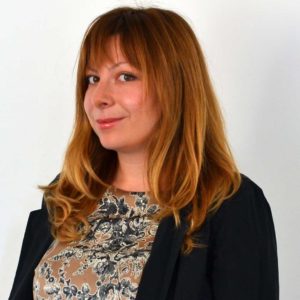 As the regional program manager for Eastern Europe and Central Asia, Margarita Milikh oversees regional programming from Montenegro to Mongolia, which focuses on such key aspects of Rule of Law, as institutional reform and good governance, access to justice and public services, commercial law reform, and anti-corruption. In this capacity, Margarita represents IDLO’s regional portfolio vis-à-vis our institutional partners, UN organizations, governments, academia, civil society and the private sector. Margarita worked on projects aimed at improving competition and public procurement policies and practice in Montenegro, Ukraine and Moldova.
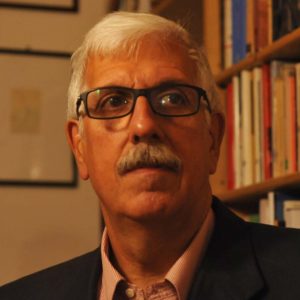 Senior economist at the Italian Competition Authority (presently head of the Economic Evaluation Committee). In the past he worked in the research department and in some investigative units (insurance, banking, retail, food). He is presently active in the making of screening tests for bid rigging and in the assessment of the impact of competition policy enforcement. He has authored several articles and books on a variety of competition law enforcement topics, including market delineation, coordinated effect of mergers, impact assessment, bid rigging , fines.
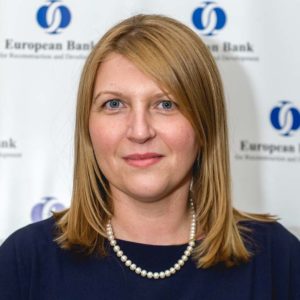 Eliza Niewiadomska, Senior Counsel in the Legal Transition Programme of the European Bank for Reconstruction and Development in London (EBRD) is responsible for public procurement regulatory advice and technical cooperation with EBRD countries of operations. Key regional technical cooperation programmes of the Legal Transition Programme include the EBRD UNCITRAL Public Procurement Reform Initiative, established in 2011, the EBRD GPA Technical Cooperation Facility, formed in 2014 and Policy Advice for eProcurement Reforms in Public Sector, first initiated in 2010.
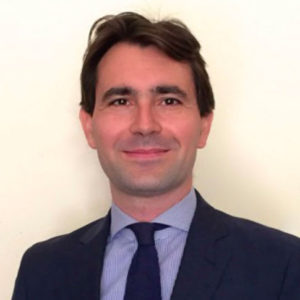 Michele Carpagnano is a partner in Dentons’ Rome office and the head of the Italian Competition & Antitrust practice.
 Alberto Heimler is professor of economics at the National School of Administration in Rome (Italy). He is the Chairman of the Working Party on Competition and Regulation of the Competition Committee of the Organization of Economic Cooperation and Development (OECD). He is the former director for research at the Italian Antirust Authority. He has been a member of the Steering Group of the International Competition Network (ICN) and co-chair of a number of ICN working groups. His academic articles on antitrust enforcement and regulation have appeared in the leading journals of the field.
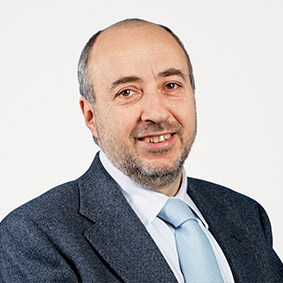 Tommaso Salonico heads the Italian Antitrust, Competition and Trade group and coordinates the Energy, Natural Resources and Infrastructure sector. His practice focuses on utilities regulation and EU and Italian competition law.
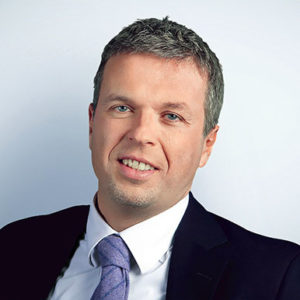 Gian Luca Zampa is a partner in Freshfields’ antitrust, competition and trade practice specialising in the whole range of merger control and antitrust matters, including cartels & leniency, unilateral conduct, vertical arrangements, and State aid, both before the EU Commission and the Italian Antitrust Authority. He is also highly active in antitrust litigation at national and EU level. Partner since 2005, Gian Luca also worked for the Autorità garante della Concorrenza e del Mercato (AGCM) (Italian Antitrust Authority) for three years as an officer and case handler and he is currently “Non-Governmental Advisor (NGA)” to the AGCM in relation to the Cartel working group of the International Competition Network – ICN. He graduated in law (J.D., summa cum laude) from the University of Bologna. He completed his first Master of Laws (LL.M.) at Queen Mary & Westfield College, University of London (EC Competition Law) and he graduated from Columbia University Law School, New York, having completed a second LL.M. in antitrust economics and law. Gian Luca is admitted to the BAR in Italy and NY.
 Paolo Buccirossi is the Director and the founder of Lear . Paolo has been working in the field of competition policy since 1994. After five years as economic advisor at the Italian Competition Authority, in 1999 Paolo set up Lear. Since then he has advised private clients and public institutions on a wide range of competition issues, including cartels, abuses of dominance, vertical agreements and mergers in a variety of industries, before the European Commission and several national competition authorities.
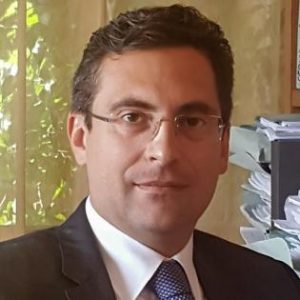 Antonio Buttà is the Chief Economist of the Italian Competition Authority. He has 15 years of experience as an economist in antitrust and regulation, economic consulting and academic research. Prior to joining the Authority, he worked in leading international economic consultancies (Europe Economics and NERA) as well as for Ofcom and Agcom, the regulators for the UK and Italian communications sectors. Antonio has also served as lecturer and teacher of economics and of industrial economics in British and Italian universities. He holds a PhD in Economics from the London School of Economics, an Italian Doctorate in Public Economics from the University of Catania and an MSc in Economics from University College London.
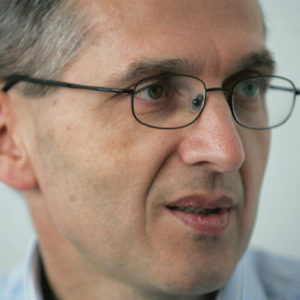 István János Tóth is the Director of the Corruption Research Center Budapest, (CRCB) and Senior Research fellow at the Institute of Economics of the Hungarian Academy of Sciences in Budapest where he has been working since 1997. He is also the managing director of the Institute for Economic and Enterprise Research (IEER). István graduated from Corvinus (former Karl Marx) University of Budapest in 1984, studied at the École des Hautes Études en Sciences Sociales (EHESS) in Paris and obtained his PhD from the Hungarian Academy of Sciences in 1998. He holds a master’s degree in economics and sociology. His main research interests are the problems of corruption and economic institutions, hidden economy and tax evasion, business tendency surveys and economic sociology. He has participated in numerous international research projects sponsored by the Commission of the European Union, USAID, EBRD, World Bank and ICEG.
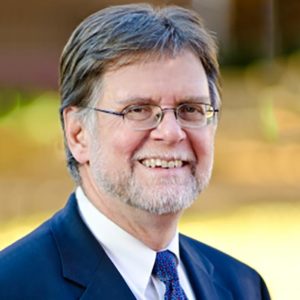 William E. Kovacic is currently a professor of Global Competition Law and Policy and director of the Competition Law Center at the George Washington University. Since 2013, Professor Kovacic has served as a Non-executive Director of the United Kingdom’s Competition and Markets Authority (CMA). He was a Commissioner of the Federal Trade Commission from January 2006 to October 2011 and served as Chairman of the FTC from March 2008 until March 2009. Previously, Professor Kovacic was the FTC’s General Counsel from 2001 through 2004. He also worked for the Commission from 1979 until 1983, initially as a staff attorney in the Bureau of Competition’s Planning Office and later as an attorney advisor to former Commissioner George W. Douglas. Before he became a Commissioner, Kovacic was the E.K. Gubin Professor of Government Contracts Law at George Washington University Law School, where he began teaching in 1999. He had taught at the George Mason University School of Law since 1986, after practicing antitrust and government contracts law for three years at Bryan Cave’s Washington, DC, office. Earlier in his career, Prof. Kovacic spent one year on the majority staff of the U.S. Senate Judiciary Committee’s Antitrust and Monopoly Subcommittee. Since 1992, Prof. Kovacic has been an adviser on antitrust and consumer protection issues to the governments of Armenia, Benin, Egypt, El Salvador, Georgia, Guyana, Indonesia, Kazakhstan, Mongolia, Morocco, Nepal, Panama, Russia, Ukraine, Vietnam, and Zimbabwe. Kovacic graduated with a bachelor’s degree from Princeton University in 1974, and received his J.D. from Columbia University in 1978.
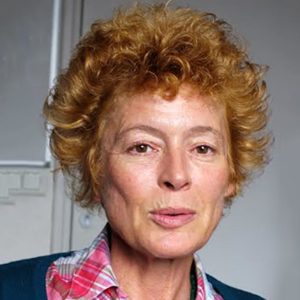 Ariane Lambert-Mogiliansky is an Associate Professor and Director of the Chair Economics of Transparency and Accountability (ETA) at the Paris School of Economics. Her research focuses on regulation and market design (particularly issues related to corruption and collusion), incentive theory (auctions and contract theory), rationality and behavioral economics and transition economics. Ariane also has more than 15 years of experience as a consultant in Eastern Europe, African and Arab countries in the fields of good governance, anticorruption and public procurement. She has been engaged in numerous projects funded by international donors, including the European Commission and the World Bank. Ariane holds a Master in Public Administration and a PhD in Economics both from the University of Stockholm.
 Mihály Fazekas is a post-doctoral research fellow at the University of Cambridge (UK), where he is currently leading a large-scale research project called “Digiwhist” which looks at transparency, corruption risks, and administrative capacity in public procurement across 35 European countries. He is also head of research/co-founder of the Corruption Research Center Budapest (Hungary), where he promotes the implementation of new measurement instruments of corruption and quality of government using “Big Data”. Mihály has a PhD in Sociology from the University of Cambridge, a Master in Public Policy from the Hertie School of Governance (Berlin), a Master in Economics from the Corvinus University of Budapest and a Master in Pedagogy from the Corvinus University of Budapest. His main areas of research are public procurement and high-level corruption. He uses mixed research methods while working in interdisciplinary teams of IT specialists, practitioners, and social scientists in order to collect, structure, and clean large administrative datasets generated by governments.
 Tommaso Valletti is the Chief Competition Economist at DG Competition, European Commission. He is Professor of Economics at Imperial College Business School, and also Professor of Economics at the University of Rome Tor Vergata. He has previously taught at the London School of Economics, Telecom ParisTech/Ecole Polytechnique, and Turin. He has a magna cum laude degree in Engineering from Turin and holds a MSc and a PhD in Economics from the London School of Economics.
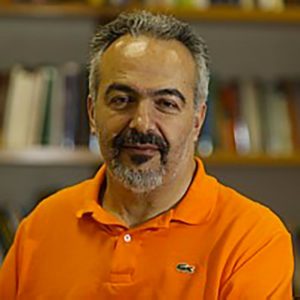 Giancarlo Spagnolo is a professor of economics at the University of Rome Tor Vergata, a research fellow of SITE Stockholm School of Economics and of the Einaudi Institute of Economics and Finance (EIEF), and a research affiliate at the Centre for Economic and Policy Research (CEPR). He is also a member of the Executive Committee of the European Association for Research in Industrial Economics (EARIE) and of ENCORE, Amsterdam.
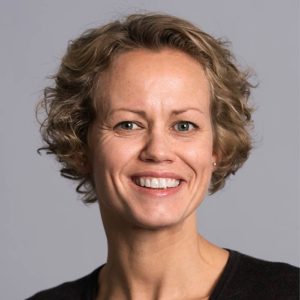 Tina Søreide is Professor of Law and Economics at the Norwegian School of Economics (NHH) and teaches the Economics of Corruption and Empirical Approaches at the International Anticorruption Academy (IACA) in Vienna. Her research focuses on corruption, governance, markets and development. She has previously worked at the Faculty of Law, University of Bergen (UiB), the Chr. Michelsen Institute (CMI) and the World Bank. Tina has been engaged in policy work for the Norwegian Government, international organizations such as the OECD, the EU, the World Bank, development agencies and governments – several times as the project leader. She is also a member of the High Level Advisory Group on Anticorruption and Integrity (HLAG) to the Secretary General of the OECD. Tina holds a Master in Economics, Statistics and Law from the University of Bergen and a PhD in Economics from the Norwegian School of Economics.
 Shuya Hayashi is a Professor of Law at the Nagoya University Graduate School of Law and a Senior Research Fellow of the Institute for Information and Communications Policy, Ministry of Internal Affairs and Communications. Previously, Shuya was a Chief Research Fellow of the Competition Policy Research Center, Fair Trade Commission of Japan. His research concentrates on competition law in the EU, US and Japan. His current research projects are focusing on the legislative history of Japanese antitrust merger regulation, law and economics and competition and regulation in the presence of network externalities. He holds a PhD in Competition Law from the Kyoto University Graduate School of Law.
 Francesco Decarolis is an Associate Professor (with tenure) at the Einaudi Institute for Economics and Finance (Italy) and an Assistant Professor at the Department of Economics of the Boston University (US). His research interests include industrial organization, market design and health economics. He has authored various research papers on competition in public procurement, including topics such as bid screening. Francesco graduated from the Bocconi University with a Degree in Economics. He also holds a Master and a PhD in Economics from the University of Chicago.
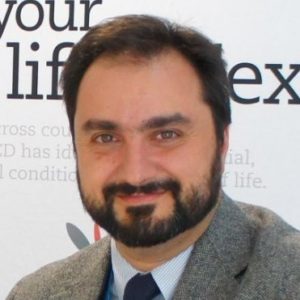 Antonio Capobianco is a Senior Expert in Competition Law within the Working Party No. 3 (WP3) of the OECD Competition Committee. WP3 focuses on International Co-operation and Antitrust Law Enforcement. He is responsible for a series of OECD projects and work streams, including the work on competition and public procurement, the work on transparency and procedural fairness, SOEs and competitive neutrality.